

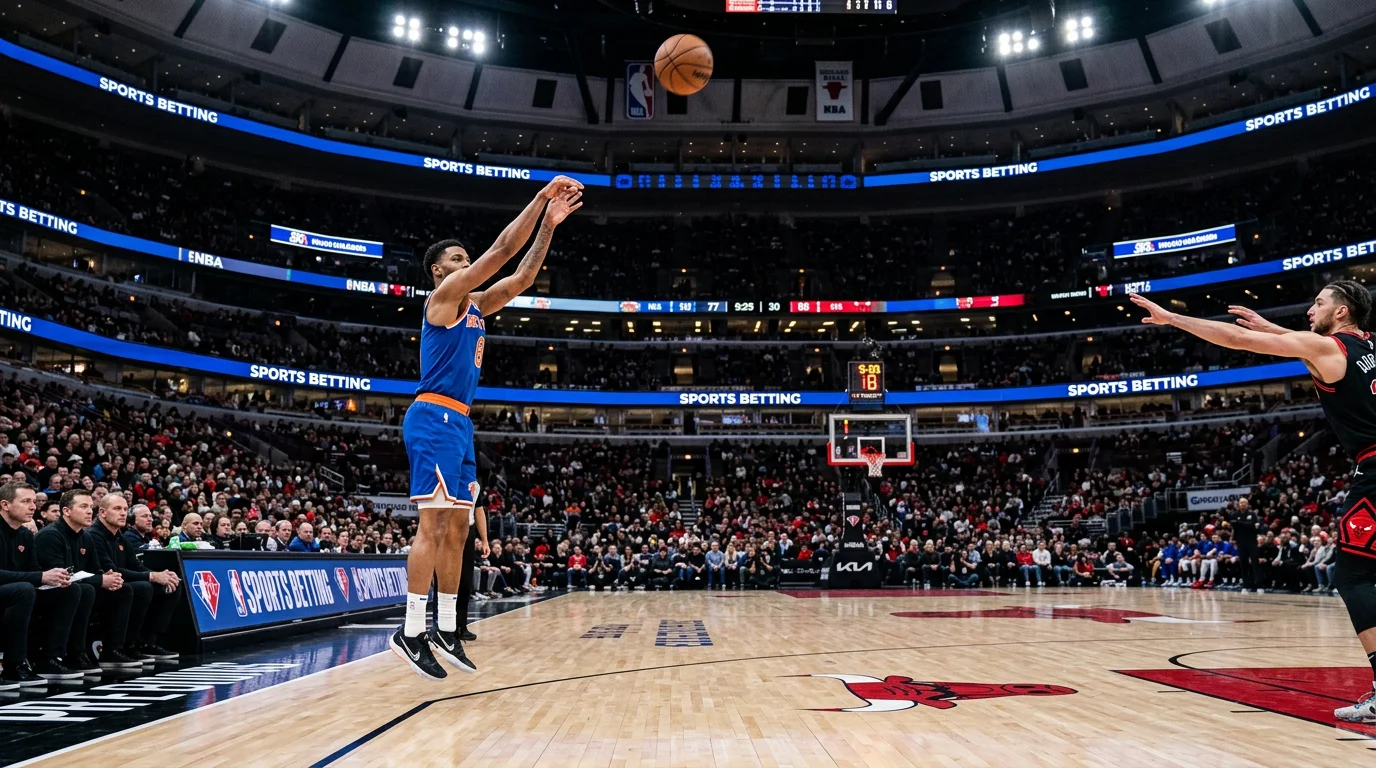
The most frustrating bet I have ever placed was a three-pointers made over on a sharpshooter who went 1-for-11 from deep. He took plenty of shots – exactly what I wanted – but none would fall. The ball bounced out, rimmed in and out, rattled around and rejected. Eleven legitimate attempts, one make. That night crystallised a truth about 3PM betting: volume matters, but variance is brutal.
NBA three-pointers made betting asks whether a player will exceed a set number of successful three-point shots. The market has grown alongside the league’s three-point revolution – modern NBA teams attempt more threes than ever, creating abundant opportunities and betting interest. The 2025-26 season opened with NBA viewership up 60%, and that expanding audience includes bettors increasingly interested in player-specific markets like 3PM props.
Understanding the relationship between attempt volume, shooting efficiency, and outcome variance is essential for 3PM betting success. Unlike points props where multiple scoring methods exist, three-pointers made depends entirely on one specific skill executed in specific situations. That concentrated dependency creates both opportunity and risk.
3PM Market Basics: How Lines Are Set
Bookmakers set 3PM lines based on a player’s recent production, expected role, and matchup context. A player averaging 3.2 made threes per game might see a line of 2.5 – close to his average but adjusted for market dynamics.
The half-point matters significantly for three-pointer props. A line of 2.5 means your over bet wins if the player makes three or more threes. Your under wins with two or fewer. That single-make swing around the line determines outcomes, which is why small shooting variance creates dramatically different results.
Odds on 3PM props typically show less balance than spread markets. A player’s over might be priced at 1.85 while his under sits at 1.95, or vice versa, reflecting where the bookmaker sees probability leaning. These imbalanced prices tell you something about market expectations even before you conduct your own analysis.
Not every player has 3PM props available. Bookmakers typically offer these markets only for players with consistent three-point volume – usually those averaging at least four or five attempts per game. Role players who might attempt zero threes some nights do not generate reliable markets.
Volume vs Efficiency: The Core Tension
Three-pointers made is the product of attempts multiplied by shooting percentage. A player attempting 10 threes at 35% efficiency expects 3.5 makes. A player attempting 6 threes at 40% efficiency expects 2.4 makes. Both variables matter, but they behave differently for betting purposes.
Volume is more predictable than efficiency. A player’s role in the offence determines his shot attempts with reasonable consistency. The team’s system, his positioning, his usage rate – these structural factors create predictable attempt ranges. You can reasonably estimate that a high-volume shooter will take 8-12 three-point attempts in a normal game.
Efficiency fluctuates wildly game to game. The same player shooting 37% for the season might go 5-for-7 one night and 1-for-9 the next. Hot and cold shooting streaks are real phenomena that statistical analysis cannot reliably predict. Efficiency variance is the primary reason 3PM betting frustrates even thoughtful bettors.
I prioritise volume when evaluating 3PM props. A player who attempts many threes has more opportunities to reach his line even on a below-average shooting night. Going 3-for-10 (30%) still produces three makes. Going 2-for-5 (40%) on an efficient night still produces only two. Volume provides cushion that efficiency cannot.
Matchup and Defence: External Factors
Opponent defence influences three-point opportunity in measurable ways. Some teams defend the perimeter aggressively, reducing quality looks. Others prioritise paint protection and concede open threes.
Research analysing thousands of NBA games shows that close games are often decided by which team executes better in crunch time – and three-point shooting frequently determines those outcomes. Defensive adjustments in tight games specifically target opposing shooters, which affects 3PM prop outcomes when games are contested.
Perimeter defensive ratings help identify favourable matchups. Teams ranking poorly in opponent three-point percentage allowed give up quality looks from deep. Targeting shooters facing these weak perimeter defences increases the probability that attempts convert to makes.
Individual defender matchups matter for primary shooters. A player guarded by a slow-footed defender might get cleaner looks than usual. A player facing an elite perimeter stopper might see heavily contested attempts all night. Checking defensive assignments – which requires pregame research – adds precision to matchup analysis.
Game script influences three-point volume and opportunity. Teams trailing late take more threes attempting quick comebacks. Teams with big leads might rest shooters or run down the clock rather than launching threes. Anticipated game flow – blowout versus close contest – should factor into 3PM prop evaluation.
Streaky Shooters: The Variance Reality
Basketball wisdom holds that shooters are streaky – that hot hands and cold spells are real. Statistical research on this question produces mixed results, but the betting implications are clear regardless of underlying cause.
Recent shooting results do not reliably predict next-game performance. A player coming off a 6-for-9 three-point explosion is not meaningfully more likely to shoot well again than his season averages suggest. Similarly, a player mired in a slump is not doomed to continue struggling. Regression to individual mean shooting percentages happens, but the timing is unpredictable.
This unpredictability means 3PM props carry inherent risk that analysis cannot eliminate. You can identify favourable volume situations, favourable matchups, favourable game scripts – and still lose because the ball does not go through the hoop. Accepting this variance is necessary for sustainable 3PM betting.
I manage 3PM variance through position sizing and selectivity. I bet smaller amounts on 3PM props than on less volatile markets. I pass on borderline situations where slight shooting variance determines the outcome. I focus on cases where volume is so high or matchup so favourable that I have margin for shooting efficiency to disappoint somewhat without losing the bet.
Home versus road splits occasionally reveal meaningful patterns for specific shooters. Some players shoot significantly better in their home arena – comfortable surroundings, familiar sight lines, supportive crowd energy. Others show no home/road differential. Checking individual player splits adds another layer of context beyond league-wide assumptions.
Rest and fatigue affect shooting touch. Players on the second night of back-to-back games often show decreased shooting percentages, particularly from three-point range where leg strength matters for lift and accuracy. Fresh legs produce better shooting outcomes on average. Factoring schedule situations into 3PM prop analysis helps identify when shooters might underperform their typical efficiency.
For understanding how individual shooting performance connects to broader game outcomes, the point spread betting guide explains the team-level factors that create the context where three-point opportunities arise.
Articles
Written by the editors at pointbetbasketball.com.
