

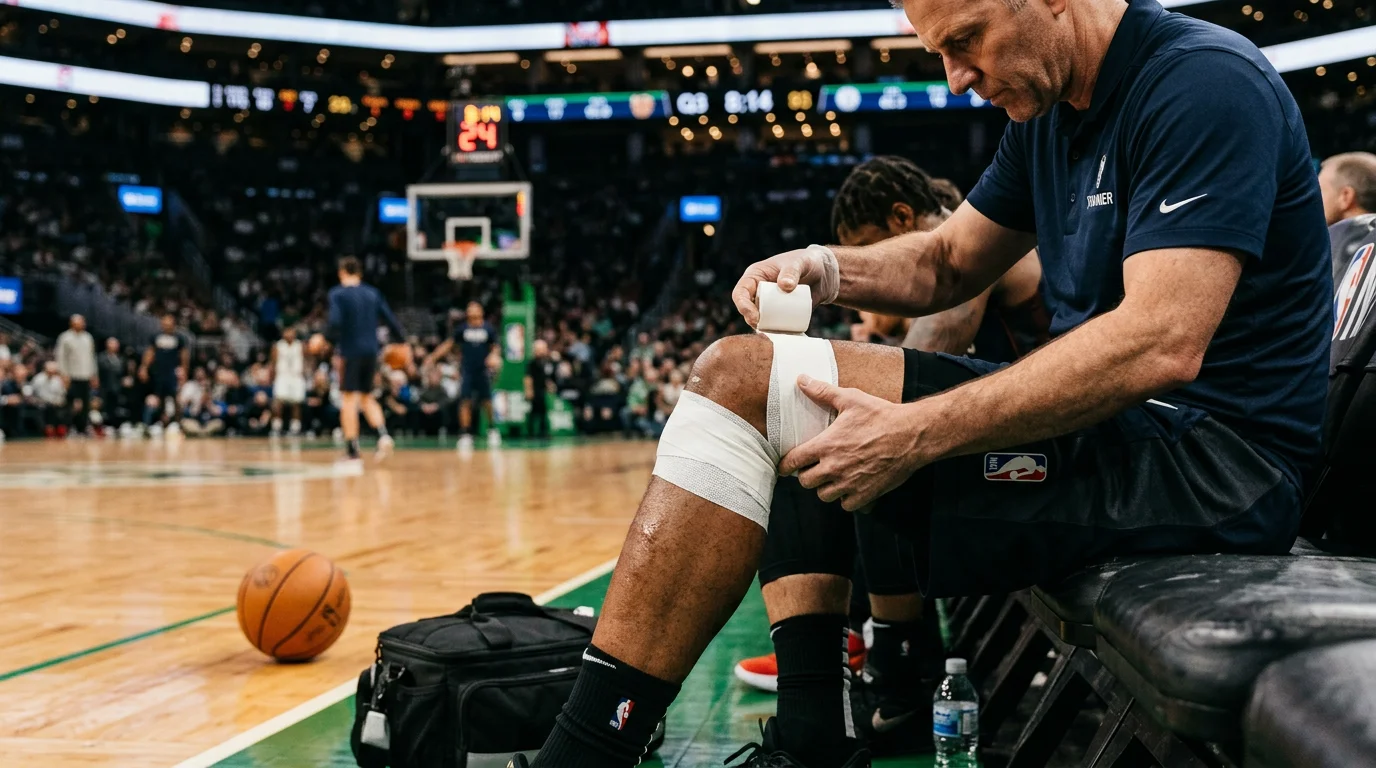
The text came at 6:47 PM eastern, roughly ninety minutes before tip-off. Giannis Antetokounmpo was officially out with knee soreness. I had already placed my bet on the Bucks covering – a bet that suddenly looked very different. The line moved three and a half points within twenty minutes. Welcome to NBA injury impact betting, where information timing is everything.
Understanding how player absences affect point spreads is essential for any serious basketball bettor. The market responds rapidly to injury news, and the magnitude of adjustments varies based on player importance, opponent quality, and replacement depth. Learning to anticipate and react to these movements can mean the difference between catching value and chasing steam.
Point spread betting dominates NBA markets – it is the most popular wager type for basketball. Every spread reflects the market’s best estimate of expected margin, incorporating all known information including roster availability. When that information changes, spreads adjust accordingly. Your job is understanding whether those adjustments are accurate, excessive, or insufficient.
How Injuries Move the Betting Line
I have tracked line movements on injury news for six years now. Patterns emerge that help predict market responses before they fully unfold.
Star player absences typically move lines between 3 and 6 points, depending on the player’s role and the team’s depth. A superstar like Nikola Jokic or Luka Doncic being ruled out can shift a spread by 5 or more points. Role players might move the line half a point or nothing at all. The market has developed rough consensus values for different player tiers.
The timing of injury news determines who captures value. Lines set on Sunday for Tuesday games assume full health. When an injury report drops Monday afternoon confirming a star is out, early bettors who anticipated the absence profit while those betting post-announcement chase worse numbers. Information advantage creates edge.
Movement is not always linear. An initial 3-point move might extend to 4 as recreational bettors pile on the now-favoured opponent, then retreat to 3.5 as sharp money comes back the other way. Reading this oscillation requires watching multiple books simultaneously and understanding typical public versus sharp betting patterns.
Replacement quality matters more than simple plus-minus statistics suggest. When a 20-point scorer sits, the team does not simply lose 20 points. Other players absorb shots, often shooting them less efficiently. Defensive assignments shuffle. The ripple effects extend beyond the absent player’s direct contribution, which is why market adjustments often exceed raw statistical values.
Timing Your Bets Around Injury Information
The NBA requires teams to submit injury reports at specific times – 5 PM eastern on most game days for evening contests. But unofficial information circulates earlier through reporters, social media, and team beat writers. Learning to navigate this information ecosystem is critical.
Following key reporters provides early indicators. Beat writers often tweet injury updates hours before official reports. Team practice reports reveal who participated fully, who was limited, and who sat out entirely. This public information predates official designations and allows anticipatory positioning.
The designation categories tell you probability levels. “Out” means the player is definitely not playing. “Doubtful” historically converts to sitting at roughly 75% rates. “Questionable” is genuinely uncertain, converting to absence perhaps 40-50% of the time. “Probable” rarely results in players sitting. Each designation warrants different betting responses.
I rarely bet on questionable situations before resolution. The uncertainty cuts both ways – you might get burned by a player being ruled in right before tip, moving the line against your position. Waiting for certainty often means accepting worse numbers, but it eliminates the scenario where your entire thesis evaporates with a single announcement.
Game-time decisions represent the hardest category. These players warm up pregame, and their status remains uncertain until shortly before tip. Betting markets often stay static during this window, then move sharply once status is confirmed. If you have strong conviction and access to real-time information, these situations offer opportunity – but the risk of being wrong is highest here.
Load Management: The Planned Absence Problem
Modern NBA roster management has created a category of absence that differs from traditional injuries: load management. Stars rest healthy to preserve their bodies for playoffs, creating predictable patterns once you know what to look for.
Back-to-back games are the most common load management trigger. Research shows fatigue from consecutive-day games costs roughly 2.25 points of performance impact. Teams protecting star players often sit them for the second game of back-to-backs, particularly when that second game is against weaker competition or on the road.
Age and injury history predict load management likelihood. Veterans with chronic conditions – knee issues, back problems, accumulated mileage – sit more frequently than young players. Tracking which players receive regular rest allows you to anticipate absences before they are officially announced.
Contending teams manage loads differently from rebuilding ones. A team fighting for playoff seeding in April plays stars through minor discomfort. A team locked into their seed might rest everyone ahead of the postseason. Understanding team context helps predict which absences are coming.
The market has become more efficient at pricing load management over time. Five years ago, you could reliably find value when stars sat predictable rest games. Today, books anticipate these absences better, and lines often account for probable load management before it is confirmed. The edge has narrowed but has not disappeared entirely.
Roster Depth and the Replacement Factor
Not all teams respond equally to missing their best player. Roster construction determines how much an absence costs in expected margin.
Deep teams absorb star absences better than top-heavy rosters. A team with strong second and third options might drop only 2 points of expected performance when their star sits. A team built around a single dominant player could see 5-plus point declines. This variance means blanket rules about injury adjustments often fail.
Position matters for replacement calculation. Point guard absences tend to disrupt team offence more than wing or big absences because the backup must run the entire system. Centres are often more replaceable in modern basketball given the position’s reduced offensive role. These positional differences inform how much the line should move.
I maintain records of team performance with and without key players. Historical data reveals which teams have overcome absences better than expected – indicating strong coaching adjustment – and which have crumbled. This historical context helps evaluate whether current line movements are appropriate.
For context on how injury considerations fit within broader spread analysis, the point spread betting fundamentals explain the framework for evaluating all factors that move NBA lines.
Articles
Published by the pointbetbasketball.com team.
