

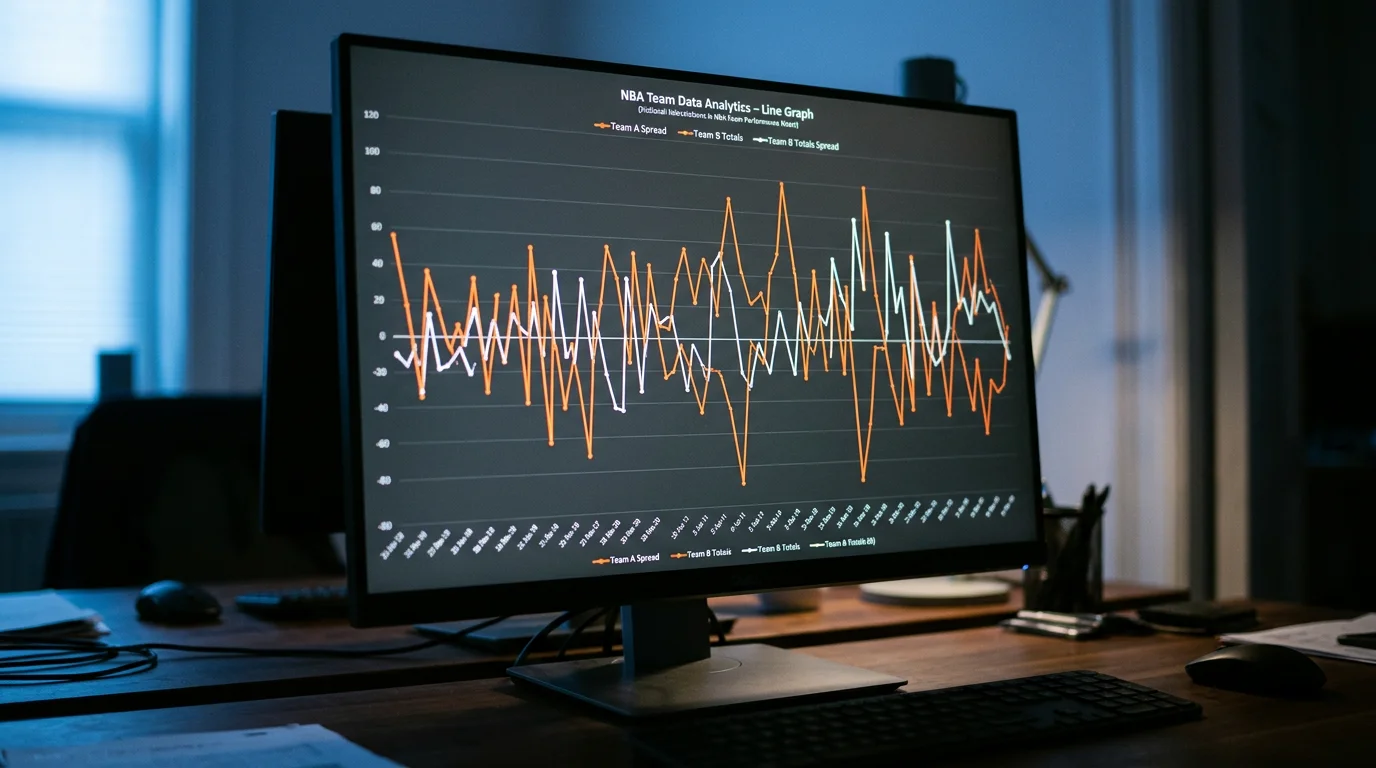
The screen showed something strange. The Lakers were getting 70% of public bets, yet their spread had moved from +3.5 to +4.5 over the past hour. More money on one side, but the line moved against that money. That contradiction taught me more about sharp versus public betting than months of reading ever had.
NBA line movement reading is the skill of interpreting spread changes to understand market sentiment and identify where professional money is positioned. Lines do not move randomly – every shift reflects betting action, injury news, or bookmaker adjustments. Learning to read these movements gives you insight into what informed bettors think, even when you cannot see their actual wagers.
The opening line represents the bookmaker’s initial estimate of fair value. Between opening and tip-off, that estimate gets tested by real money. To break even on standard -110 spread bets, you need a 52.4% win rate. Sharp bettors who sustain that rate move markets. Understanding their influence helps you align with informed money rather than fighting against it.
Opening Lines vs Closing Lines: What the Gap Reveals
Every NBA spread has a life cycle. It opens, it moves, and it closes. The journey between opening and closing numbers tells a story worth reading.
Opening lines post anywhere from 12 to 48 hours before tip-off depending on the bookmaker and the game. These early numbers reflect the oddsmaker’s projections but lack the refinement that betting action provides. Sharps often attack soft openers, moving lines quickly toward more accurate numbers.
The first few hours after opening typically see the largest movements. This is when professional bettors with predictive models and substantial bankrolls place their heaviest action. A line that moves two points in the first three hours is incorporating sharp opinion. A line that barely budges suggests the opener was already accurate.
Closing lines are considered the most efficient point spread estimates available. Research consistently shows that closing lines beat opening lines in predictive accuracy. By tip-off, the market has absorbed all available information and betting volume. If you consistently bet numbers worse than closing lines, you face a structural disadvantage.
Tracking your own bets against closing line value – known as CLV – provides one of the best measures of betting skill. Beating closing lines over time indicates genuine edge. Getting worse numbers than close consistently suggests you are on the wrong side of market efficiency. The opening-to-close gap becomes your benchmark for position quality.
Sharp Money Signals: Spotting Professional Action
Chris Christie, the former New Jersey governor who helped legalise US sports betting, once noted that prediction markets and sportsbooks function similarly: “If it walks like a duck and quacks like a duck…” The same logic applies to identifying sharp money. You cannot see the actual bets, but you can recognise their footprints.
Reverse line movement is the clearest sharp signal. When the majority of bets back one side but the line moves toward the other, substantial money – not bet count – is driving the shift. Bookmakers care about liability exposure, not how many slips they print. Ten thousand pound bets from known sharps outweigh hundreds of fifty pound recreational wagers.
Steam moves – sudden, sharp line movements across multiple bookmakers simultaneously – indicate coordinated professional action. These moves happen quickly, often within minutes. By the time you see a steam move on your preferred book, the value may already be gone. But steam move patterns reveal which games attracted sharp attention and which sides they favoured.
Line freezes offer another signal. When a book stops taking action on a spread entirely, they fear their number is off. This typically happens after substantial sharp betting exposes a vulnerability. A frozen line tells you professionals found value – even if you missed the opportunity to join them.
Timing of movement matters. Sharp action tends to come early, when lines are softest and limits are highest. Public money flows closer to game time, particularly for nationally televised contests. Movement patterns – early versus late, steady versus sudden – help distinguish informed action from recreational volume.
Reverse Line Movement: The Counterintuitive Signal
Reverse line movement deserves deeper examination because it confuses so many bettors initially. The concept seems backward until you understand the economics.
Bookmakers set lines to balance their exposure, ideally attracting equal money on each side. But they also shade lines based on expected betting patterns. If they anticipate heavy public action on the Lakers, they might set the opening line slightly unfavourable to Lakers backers, building in cushion.
When sharps bet the opposite side with meaningful volume, the book faces a choice: adjust the line and risk even more public money on the popular side, or hold and accept sharp exposure. Smart books adjust because sharp money predicts outcomes better than public money. The line moves despite the bet count.
Live betting has grown to represent over 62% of online sports betting volume. This in-play market creates additional line movement complexity. Pre-game sharp action might position one way, but live betting dynamics can shift apparent market sentiment. Separating pre-game signals from in-play noise requires tracking when movements occur.
I track reverse line movement games separately in my records. Over multiple seasons, these situations have shown positive results when following the sharp side – the side receiving fewer bets but moving the line. Not every reverse movement game wins, but the aggregate edge is real.
Putting Movement Data Into Practice
Reading line movement is only valuable if you translate observations into better betting decisions. Here is how I actually use movement data in my process.
I check opening lines as soon as they post, even for games I do not plan to bet. This establishes baseline expectations against which subsequent movements can be measured. A three-point move on a game I am watching tells me something. A half-point move suggests the market agrees with the opener.
When my analysis suggests betting one side, I verify that line movement supports rather than contradicts my thesis. If I like a team but the line has moved significantly against them since opening, I investigate why. Sometimes there is news I missed. Sometimes sharps simply disagree. Either way, the movement deserves consideration.
I avoid betting into strong recent movement unless I have specific reason to believe the move has gone too far. Chasing steam after it has already happened usually means catching worse numbers. If sharps pushed a line from -3 to -5, betting at -5 surrenders the value they captured.
For a foundational understanding of how spreads function before movement occurs, the point spread betting guide explains the mechanics that line movement modifies.
Articles
Written by the editors at pointbetbasketball.com.
