

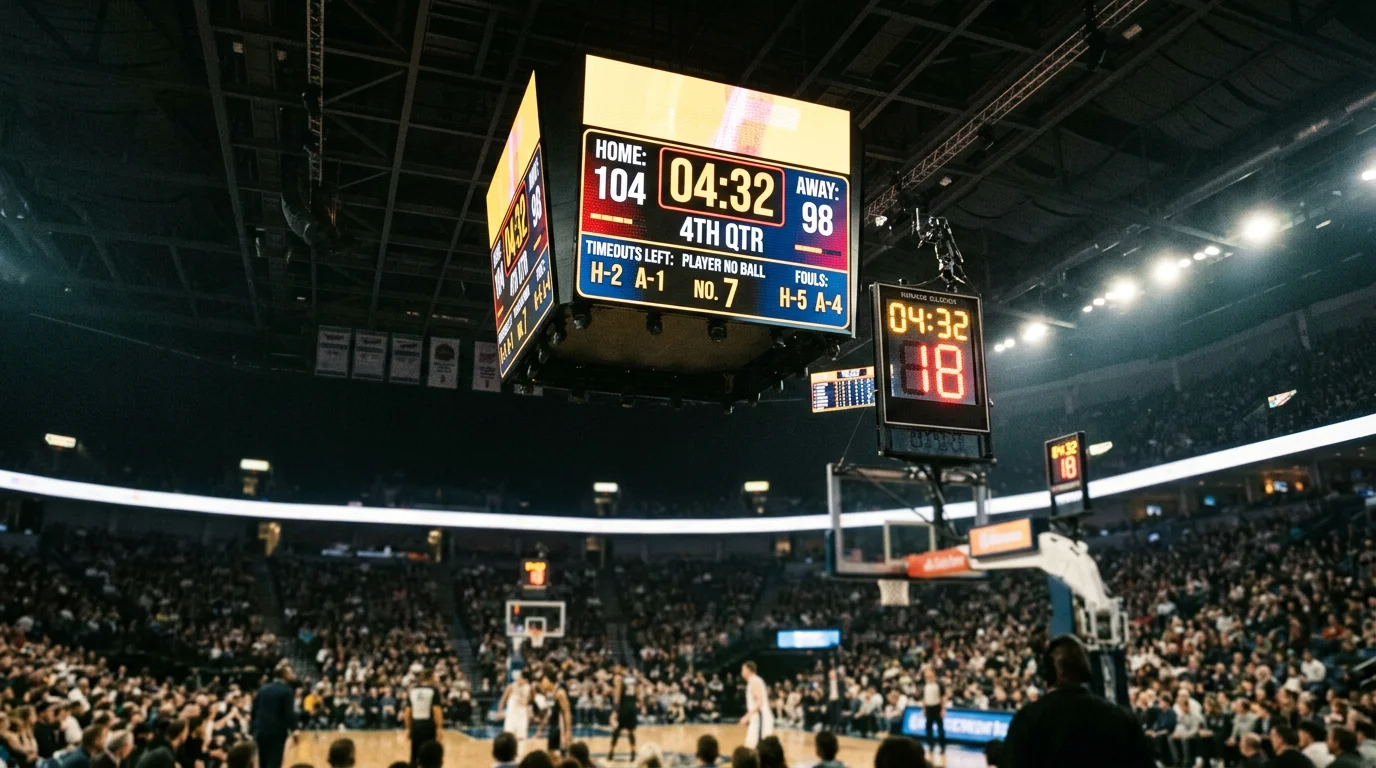
I once watched a nine-point fourth quarter lead evaporate in three minutes. My full-game spread bet looked dead, then alive, then dead again as the final period unfolded. That night I started researching Q4 betting specifically – understanding the unique dynamics of the final twelve minutes became an obsession that eventually became profitable.
NBA fourth quarter betting isolates the game’s most intense period. Starters play heavy minutes, coaches abandon conservative tactics, and psychological pressure affects execution. Research analysing over 2,000 games across a decade found that home teams win more than half of close games – and close games are decided in the fourth quarter. Those clutch-time dynamics create opportunities distinct from full-game betting.
UK bookmakers offer quarter-specific markets on most NBA games. You can bet Q4 spreads, Q4 totals, and sometimes Q4 moneylines as standalone wagers. These markets attract less betting volume than full-game lines, which can mean less market efficiency and better value for those willing to specialise.
How Q4 Spread Dynamics Differ From Full Game
Fourth quarter spreads behave differently from full-game lines because the context has completely changed. By Q4, you know the score, the foul situation, the rotation patterns, and the game flow. That information shapes how the final twelve minutes unfold.
Game state determines strategy. A team trailing by fifteen points in the fourth plays differently from a team tied or leading. The trailing team increases pace, takes risks, and extends their defence – desperate to create turnovers and quick scoring opportunities. The leading team slows pace, protects the ball, and takes time off the clock. These strategic shifts affect Q4 scoring patterns independently of team quality.
Foul trouble accumulated through three quarters constrains fourth quarter rotations. If a team’s best defender has four fouls entering Q4, their coach faces a dilemma: risk the foul-out or play inferior defenders in crunch time. This information is available before Q4 betting closes, giving you data the full-game market could not incorporate.
Timeout availability matters enormously in close fourth quarters. Teams save timeouts for late-game situations, using them to set up plays, stop runs, and manage the clock. A team with three timeouts entering Q4 has more strategic flexibility than one with just one remaining. This rarely-discussed factor influences fourth quarter execution.
The spread itself often reflects expected pace divergence. If a team is down ten entering Q4, the Q4 spread might favour the trailing team because they will play more aggressively. This does not mean they will win the quarter outright – just that the expected pace and desperation creates more opportunities for them to outscore their opponent in isolation, even if they still lose the game.
Garbage Time: The Value Killer and Creator
Garbage time – those final minutes of blowouts where outcomes are decided and benches clear – distorts fourth quarter betting in ways you must understand.
The definition varies, but I consider garbage time active when a team’s win probability exceeds 95% with five or more minutes remaining. At that point, stars exit, reserves enter, and the game’s competitive intensity disappears. Both teams stop trying to win the game and start trying to avoid injuries or get bench players experience.
Garbage time typically favours the trailing team’s Q4 spread. The leading team stops running efficient offence and plays passive defence. Bench players for the trailing team often have fresh legs and something to prove. The combination produces quarters where the losing team outscores the winner despite never threatening the actual outcome.
Recognising games likely to reach garbage time before they get there offers betting advantage. Severe mismatches between elite and struggling teams, back-to-back situations for one side, or injury-depleted rosters often produce blowouts. In these scenarios, Q4 spreads tend to favour the expected loser more than full-game analysis would suggest.
The Boston Celtics and Denver Nuggets maintained 79% home win percentages over recent seasons – elite levels that often produced blowout wins. Betting against their fourth quarter spreads in home games became a viable strategy because their dominance produced garbage time regularly. The inverse applied too: their Q4 totals often came under as pace slowed in decided games.
Clutch Performers and Fourth Quarter Matchups
Certain players elevate their performance in high-leverage fourth quarter situations while others decline. Identifying these tendencies provides edge in Q4 betting.
Usage rates often spike in the fourth quarter for star players on close games. A player who averages 30% usage across a full game might reach 40% usage in clutch situations as teams simplify their offence and put the ball in their best player’s hands. This concentration affects both that player’s stats and his teammates’ opportunities.
Free throw shooting matters more in the fourth quarter than any other period. Teams trailing intentionally foul to stop the clock and gain extra possessions. A team with poor free throw shooters faces compounded pressure – they cannot extend leads from the line, making their defensive stops less valuable. Tracking team free throw percentages helps evaluate Q4 spread scenarios.
Defensive intensity typically increases in close fourth quarters, reducing scoring compared to earlier periods. Players give maximum effort, coaches call tighter rotations, and referees sometimes allow more physical play in crunch time. This defensive surge makes Q4 unders attractive in evenly-matched games where neither team can run away.
Experience matters in late-game situations. Teams with playoff-tested veterans have faced pressure before. Young teams in unfamiliar situations make more mistakes – rushed shots, poor clock management, defensive breakdowns. This is not superstition; it is pattern recognition from thousands of games. Veteran teams tend to outperform in close fourth quarters.
Live Q4 Betting Angles
In-play betting during the fourth quarter requires faster decision-making and different analysis than pre-game betting. The market moves constantly as each possession changes the situation.
I look for overreaction opportunities in live Q4 markets. A quick 8-0 run might swing live odds dramatically, pricing in momentum that often regresses. Teams rarely sustain hot shooting or dominant defence for entire quarters. Betting against recent momentum – if the underlying matchup analysis supports it – can capture overreaction value.
Foul situations create predictable game flow changes. When a team enters the bonus, every subsequent foul sends the opponent to the free throw line. This speeds up scoring and increases total points. Live totals sometimes lag in adjusting to bonus situations, creating brief value windows.
Timeout patterns signal coaching intentions. A timeout after an opponent’s run indicates the coach wants to settle his team and reset. A timeout with three minutes left and the team trailing often precedes aggressive play-calling. These signals help anticipate game flow without requiring you to analyse the basketball itself.
For context on how fourth quarter betting connects to full-game strategy, the comprehensive point spread betting guide covers the foundational concepts that inform all quarter-specific analysis.
Articles
Published by the pointbetbasketball.com team.
