

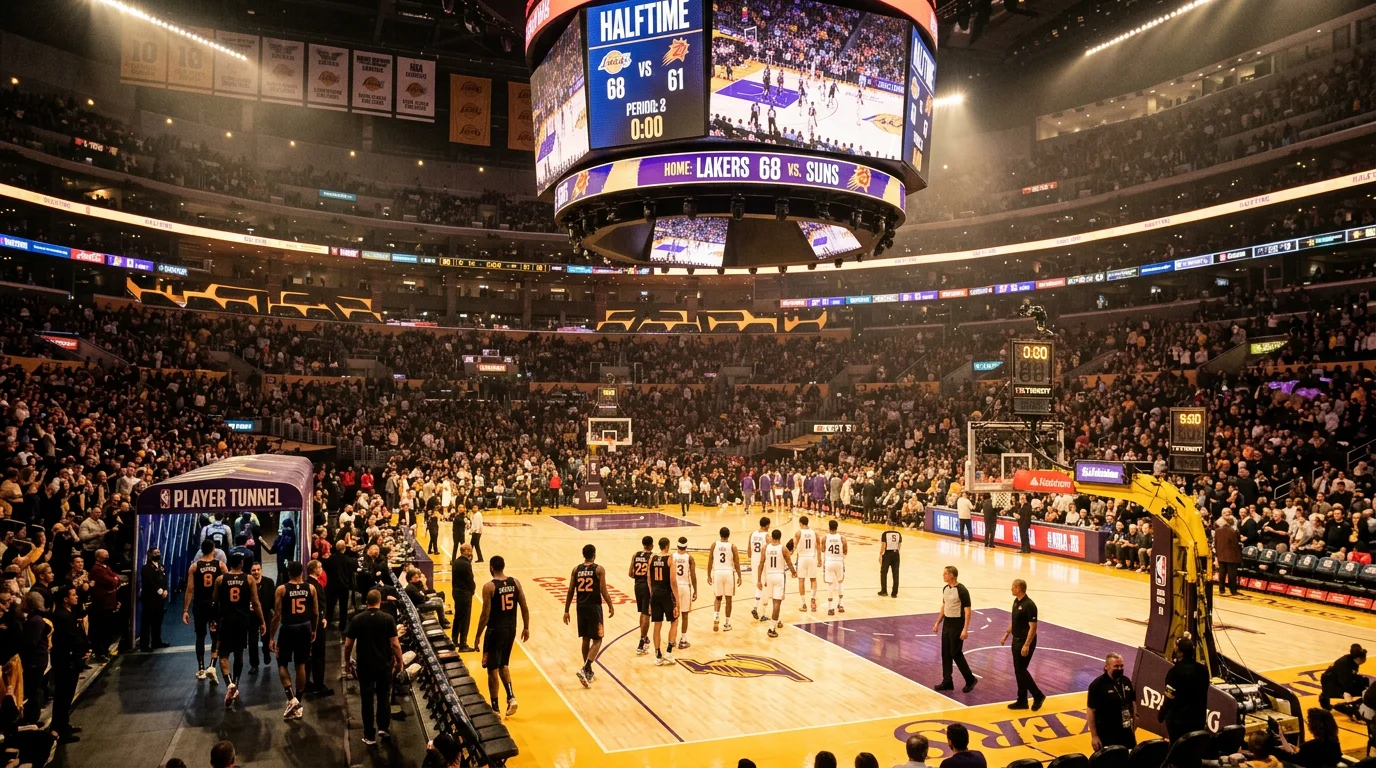
Halfway through a December game last season, I realised I had won six consecutive first half bets but lost three full-game bets on those same matchups. The teams I liked were executing early, then collapsing or coasting in the second half. That disconnect pushed me to treat first half betting as an entirely separate discipline – and my results improved when I did.
NBA first half betting isolates the opening twenty-four minutes of basketball. The market offers 1H spreads and 1H totals that settle at halftime, independent of how the game eventually ends. For bettors who believe their edge concentrates in specific game phases, these markets provide targeted exposure without second-half variance muddying the outcome.
Home court advantage – valued at approximately 3 points for full games – does not distribute evenly across halves. Early research suggested the home edge manifests more strongly in the first half before fatigue and adjustment reduce its impact. Understanding how that 3-point edge translates to half-game markets shapes smarter first half betting.
How First Half Spreads Are Calculated
Bookmakers derive first half spreads from full-game lines through division rather than independent projection. This mechanical relationship creates predictable pricing patterns.
The standard formula takes the full-game spread and divides by approximately 1.9 to 2.0. A game with a full-game spread of -7 might see a 1H spread near -3.5 or -4. This is not perfect halving because scoring is not perfectly distributed across halves – fourth quarters often see more points than first quarters, so the first half accounts for slightly less than half the expected margin.
Half-point adjustments prevent ties and reflect the rounding process. If the calculation produces -3.3, the book might offer -3 or -3.5 depending on their exposure preferences. These rounding decisions create small inefficiencies that experienced bettors can exploit when they know which direction favours value.
The relationship between 1H and full-game spreads is not locked. Strong public action on full-game spreads might move that line while leaving 1H lines unchanged, creating temporary disconnection. Books reconcile these gaps eventually, but the lag provides windows where 1H and full-game markets imply different game expectations.
I track the ratio between 1H outcomes and full-game outcomes for different spread levels. Certain spread ranges show patterns – heavy favourites cover the first half more often than their full-game rate would suggest, while slight favourites show less consistent first half results. These tendencies inform when 1H spreads offer better value than their parent full-game lines.
Early Game Patterns Worth Knowing
First quarters and first halves show behavioural patterns that differ from later game periods. Recognising these patterns improves first half bet selection.
Home teams win roughly 60% of NBA games straight-up. That advantage concentrates somewhat in early quarters when crowd energy peaks and visiting teams adjust to unfamiliar environments. Road teams historically start slow more often than they finish slow, suggesting first half home spreads carry slightly better expectation than second half equivalents.
Starters play heavier first half minutes in most rotation systems. Coaches often give their best players extended runs in the first and third quarters, then manage minutes with the bench in the second and fourth. This means first half betting captures more starter-versus-starter matchups, which is valuable when your analysis focuses on top player performance.
Pace tends to be higher in the first half than the fourth quarter of close games. With no clock pressure and no reason to slow down, teams play at their natural tempo early. This affects 1H totals – games that might see grinding fourth quarters often feature higher-paced first halves. The 1H total can represent proportionally more than half the full-game total in expected value.
Adjustment games favour first half betting. When teams meet for the second or third time in a season, the later-positioned team often adjusts better to what they saw previously. But those adjustments typically take time to implement – coaches save new wrinkles for second half deployment. First half betting captures the pre-adjustment matchup, which sometimes differs from full-game dynamics.
First Half Totals: A Distinct Market
First half totals attract less betting volume than full-game totals, which theoretically means less market efficiency. This creates opportunity for bettors willing to specialise.
The calculation follows similar logic to spreads. Full-game totals divide by roughly 2.05 to 2.10 to produce 1H totals, reflecting that first halves typically see slightly fewer combined points than second halves. A game with a full-game total of 225 might carry a 1H total around 108-110.
Shooting variance affects 1H totals more than full-game totals in percentage terms. Over 48 minutes, hot and cold streaks tend to balance. Over 24 minutes, variance has less time to regress to mean. This makes 1H totals inherently less predictable, but also means the market has more room to be wrong.
Pace-of-play analysis translates directly to first half totals. Fast-paced teams start fast. Defensive-minded teams establish their identity early. The stylistic matchup that drives full-game total expectations applies equally – perhaps more reliably – to the first half before tactical adjustments alter game flow.
I favour 1H unders in games featuring elite defensive teams. Defence travels better than offence, and defensive schemes take less time to implement than complex offensive systems. A top-five defence against a mediocre offence often produces slow-scoring first halves even when second half desperation eventually pushes full-game totals higher.
First Half vs Full Game: Choosing Your Market
The decision between betting first half and full game should not be arbitrary. Each market rewards different types of analysis and conviction.
If your edge comes from matchup analysis that might be adjusted away, first half betting captures your thesis before coaching changes occur. If your edge comes from understanding late-game execution and clutch performance, full-game betting makes more sense. The market you choose should match where your actual insight lives.
Variance management favours first half betting for some bankroll approaches. Two 1H bets settle faster than one full-game bet, allowing you to reinvest (or cut losses) sooner. For bettors who want more decisions over an evening’s games, first half markets provide opportunities without requiring you to wait three hours for resolution.
Correlating 1H and full-game bets on the same game is an advanced tactic. You might bet 1H over and full-game under if you expect a high-scoring first half followed by defensive adjustments. These correlated positions create unique payout profiles that neither market offers independently.
The comprehensive point spread betting guide explains the full-game mechanics that first half markets derive from, providing essential context for understanding how these market relationships function.
Articles
Written by the editors at pointbetbasketball.com.
